Insulin Syringes for Peptide Reconstitution: A Practical Handling Guide
Insulin syringes for peptide reconstitution — choose the right volume, reconstitute without ruining the vial, and handle what you've drawn. UK practical guide.
By Daisy Lin
Medical Writer • Reviewed April 27, 2026
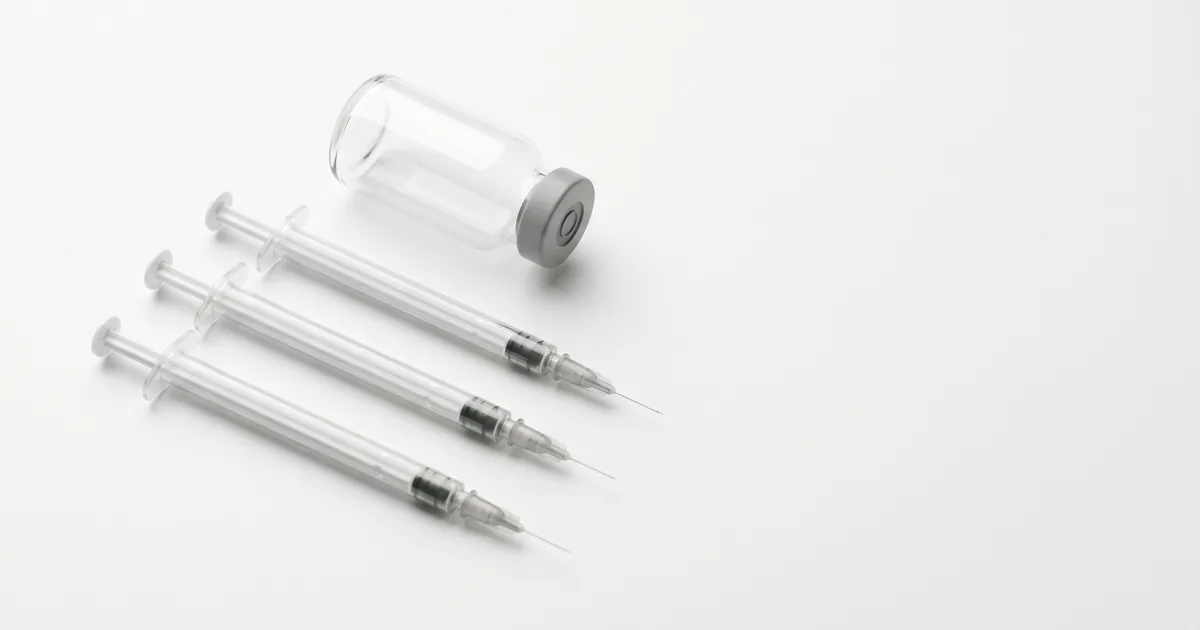
For most peptide reconstitution work the right tool is a U-100 insulin syringe with an integrated 29G or 30G needle, in a 1 mL barrel for the reconstitution draw and a 0.3 mL or 0.5 mL barrel for subsequent dosing. The integrated needle removes hub dead-space that would otherwise lose you measurable peptide on every draw, the unit graduations are easier to read at small volumes than millilitre marks, and the short 6 mm to 8 mm needle is appropriate for subcutaneous delivery.
This is a handling guide for people who already know what they are doing and want a sanity check on the supplies side — not a protocol, not dosing advice, and not a research-use endorsement.
Ground rules before we start
This is a handling guide, not a protocol. We do not sell peptides — we sell the supplies you use to handle them. Dosing, research use and pharmacology are not in this post. If you are looking for those, close this tab.
The supplies discussed here are CE-certified for human use. That is a legal classification about the syringe, the pad and the water — not a recommendation for what to put through them.
With that out of the way.
Why insulin syringes specifically
Insulin syringes (U-100, 29G or 30G, 0.3 mL or 0.5 mL or 1 mL) are the de facto standard for handling small volumes of reconstituted peptides because three properties line up:
- Graduation is in units, not millilitres. Units are easier to read at small volumes than "0.08 mL" vs "0.10 mL" on a hand-drawn scale.
- The needle is permanently bonded (integrated) to the barrel. There is no hub dead space, which matters when your total volume is 10–50 units.
- The needle is short (6–8 mm) and fine (29G or 30G). For subcutaneous delivery, you do not need anything longer.
A 1 mL insulin syringe holds 100 units. A 0.5 mL syringe holds 50 units. A 0.3 mL syringe holds 30 units. The volume-to-unit conversion is not metric-inspired — it comes from the U-100 insulin concentration standard. On the barrel, 100 units = 1 mL. That is it.
The vial, before you touch the water
Before reconstitution, check three things on the lyophilised vial:
- The powder is a compact disc or a loose puff at the bottom — not climbing the walls of the vial. Peptide stuck to the upper walls usually means the vial lost its vacuum at some point in transit. It may still be fine, but it is one of the first signs of a cold-chain issue.
- The stopper is intact and centred. If it looks tilted, the seal may have broken.
- There is no visible discolouration. Most research peptides are a clean white. Yellow tinges, brown specks, or "wet" looking powder are reasons to stop.
Reconstitution, the part where people screw up
The rule nobody writes down: aim the stream at the side of the vial, not the powder.
If you squirt bacteriostatic water directly onto a small amount of lyophilised peptide, you will get foaming and splashing, and some of the material will get displaced into tiny droplets on the stopper. Those droplets do not come back. You lose a small, unknown fraction.
The fix is almost silly:
- Wipe the stopper of both vials (water and peptide) with an alcohol pad. Let it dry.
- Draw your intended volume of bacteriostatic water into a 1 mL insulin syringe. For a 5 mg lyophilised vial reconstituted to "1 mL total", draw 1 mL.
- Push the needle into the peptide vial at a ~30° angle so the bevel faces the glass wall.
- Press the plunger slowly. Watch the stream hit the glass and run down to the powder. Not a blast — a trickle.
- When the water is in, do not shake. Roll the vial gently between your palms for 10–20 seconds. Let it sit. The peptide goes into solution in under a minute for most small peptides. If it has not dissolved in five minutes of gentle rolling, something is wrong with the peptide, not your technique.
Shaking denatures some peptides. Rolling does not. You do not need a vortex mixer, and you definitely do not need one of those "use warm water" hacks — room-temperature bacteriostatic water, straight from the vial, is correct.
One small handling note that is not in any datasheet: bac water vials with a slightly recessed rubber stopper need a 25G or thicker draw needle to pierce cleanly. A 30G bends sideways against that geometry and you will end up with a flake of stopper in the vial. If you are reconstituting from a recessed-stopper vial, draw with 25G and inject with 29G or 30G.
If you are restocking the consumables side, the InjectKit 29G × 1/2 inch insulin syringe 100-pack is the format most people use for the reconstitution draw, paired with a 30 mL bacteriostatic water vial sized to match the 28-day in-use window.
Bacteriostatic water is not sterile water
"Bac water" is sterile water with 0.9% benzyl alcohol added. The benzyl alcohol is a bacteriostatic preservative — it stops bacterial growth in the vial between draws, which is why one vial is reusable for up to 28 days after first puncture.
Bacteriostatic water is the reconstitution diluent for multi-use vials. Sterile water for injection (no preservative) is the diluent for single-use vials. If you reconstitute a multi-use vial with plain sterile water, you have just made a single-use vial — pharmacology textbooks say "discard after first draw."
Shelf life, once punctured:
- Sealed, unopened bac water vial: the expiry printed on the vial.
- Punctured bac water vial: 28 days at room temperature. Write the date on the vial with a marker the first time you stick it.
- Reconstituted peptide in bac water: depends on the peptide. Some are stable for weeks refrigerated, some lose potency in days. The vial's own datasheet (if any) is your source of truth, not a forum.
Drawing and dosing
Two things that matter:
Air-draw before you draw liquid. Push air into the vial equal to the volume you are about to remove. This prevents a vacuum building up over repeated draws, which is what causes the plunger to pull itself backwards mid-draw.
Tap out bubbles while the needle is still in the vial. Then draw an extra unit or two, flick the syringe to move bubbles to the top, and push them back into the vial. Do not try to expel bubbles into the air — you lose peptide.
A small bead of bubbles in the tip of a 29G or 30G insulin syringe is not a safety problem for subcutaneous delivery (the short needle cannot reach a vein) but it does mean your measured dose is off by whatever volume of air you just drew.
Storage
Unreconstituted lyophilised peptide: freezer, –20 °C if possible, refrigerator if not. The freezer gives shelf life in years. The refrigerator gives shelf life in months.
- Reconstituted peptide
- refrigerator, 2–8 °C, in the original vial, upright. Never freeze a reconstituted vial. Ice crystal formation shreds peptide chains — you will thaw a vial of saline.
- Alcohol pads and unused syringes
- room temperature, dry, dark. Not the freezer.
The shortlist
- Use a 1 mL U-100 29G or 30G syringe for draws between 5 and 100 units. Use a 0.3 mL for draws under 30 units.
- Do not blast water onto powder. Trickle it down the glass.
- Do not shake. Roll.
- Bac water only for multi-use vials. 28 days after first puncture.
- Air in before liquid out.
- Reconstituted goes in the fridge, never the freezer.
If any of this contradicts the vial's own datasheet, the datasheet wins.
FAQ
What size insulin syringe is best for peptide reconstitution? A 1 mL U-100 29G or 30G syringe for the reconstitution draw, and a 0.3 mL or 0.5 mL barrel for smaller follow-up doses. The 0.3 mL barrel has bigger spacing between unit marks, which makes small draws more accurate.
Is bacteriostatic water the same as sterile water for injection? No. Bac water has 0.9% benzyl alcohol as a preservative; sterile water for injection has no preservative. Bac water keeps a multi-use vial usable for up to 28 days after first puncture. Sterile water for injection is single-use.
Can I shake a reconstituted peptide vial to dissolve faster? No. Shaking can denature peptide chains and creates foam that displaces material onto the stopper. Roll the vial gently between your palms instead — most small peptides go into solution in under a minute.
Why does my plunger pull itself back when I draw from the vial? You did not equalise pressure. Push the same volume of air into the vial as the liquid you are about to draw before you withdraw the plunger.
Can I freeze reconstituted peptide to extend shelf life? No. Ice crystal formation shreds peptide chains and renders most peptides inactive on thaw. Refrigerate (2–8 °C) and follow the datasheet's stability window.
How long does an opened bac water vial last? 28 days at room temperature after first puncture, provided the stopper is wiped with alcohol before each access. Discard after 28 days regardless of remaining volume.
If you are restocking, the 29G × 1/2 inch insulin syringe 100-pack, alcohol prep pads and 30 mL bacteriostatic water vials all ship from our EU warehouse — same supplies referenced throughout this article.
Sources
- World Health Organization, Best Practices for Injections and Related Procedures Toolkit — who.int
- Centers for Disease Control and Prevention, Safe Injection Practices to Prevent Transmission of Infections — cdc.gov
- U.S. Pharmacopeia, USP <797> Pharmaceutical Compounding — Sterile Preparations — usp.org
- Pfizer (Hospira), Bacteriostatic Water for Injection USP Prescribing Information — pfizermedicalinformation.com
- Wang W. Instability, stabilization, and formulation of liquid protein pharmaceuticals. Int J Pharm. 1999;185(2):129–188 — doi.org
- Manning MC, Chou DK, Murphy BM, Payne RW, Katayama DS. Stability of protein pharmaceuticals: an update. Pharm Res. 2010;27(4):544–575 — doi.org
- ISO 7886-1:2017 Sterile hypodermic syringes for single use — iso.org
This article is for general information only and is not medical advice. Always consult your prescriber or pharmacist for guidance specific to your situation.
Frequently asked questions
What size insulin syringe is best for peptide reconstitution? +
A 1 mL U-100 29G or 30G syringe for the reconstitution draw, and a 0.3 mL or 0.5 mL barrel for smaller follow-up doses. The 0.3 mL barrel has bigger spacing between unit marks, which makes small draws more accurate.
Is bacteriostatic water the same as sterile water for injection? +
No. Bac water has 0.9% benzyl alcohol as a preservative; sterile water for injection has no preservative. Bac water keeps a multi-use vial usable for up to 28 days after first puncture. Sterile water for injection is single-use.
Can I shake a reconstituted peptide vial to dissolve faster? +
No. Shaking can denature peptide chains and creates foam that displaces material onto the stopper. Roll the vial gently between your palms instead — most small peptides go into solution in under a minute.
Why does my plunger pull itself back when I draw from the vial? +
You did not equalise pressure. Push the same volume of air into the vial as the liquid you are about to draw before you withdraw the plunger.
Can I freeze reconstituted peptide to extend shelf life? +
No. Ice crystal formation shreds peptide chains and renders most peptides inactive on thaw. Refrigerate (2–8 °C) and follow the datasheet's stability window.
How long does an opened bac water vial last? +
28 days at room temperature after first puncture, provided the stopper is wiped with alcohol before each access. Discard after 28 days regardless of remaining volume.
If you are restocking, the 29G × 1/2 inch insulin syringe 100-pack, alcohol prep pads and 30 mL bacteriostatic water vials all ship from our EU warehouse — same supplies referenced throughout this article.
Related reading
Get your supplies
CE-marked syringes and alcohol prep pads. Shipped from Spain across the EU and UK.